Choosing the right hot and cold therapy supplier takes more than a price check. Here’s what smart buyers are starting to look for—and why it matters.
With over 50 years of experience working directly alongside procurement teams, we understand that when you are evaluating hot and cold therapy suppliers, price is often the most visible variable—the one that is easiest to compare, benchmark, and justify on a spreadsheet.
However, we also know from experience that a lower quoted unit cost can quickly be erased by inconsistent thermal performance, seal failures, regulatory documentation gaps, or poor fill rates during seasonal demand spikes. For healthcare systems, pharmacy chains, medical distributors, and private-label brands, selecting a manufacturer is no longer just a pricing decision; it is a strategic risk mitigation choice that affects product safety, brand reputation, and long-term supply stability.
That is why the most experienced B2B buyers we partner with no longer view hot and cold therapy as a commodity purchase. They evaluate it as a supplier capability decision.
The best OEM partners do more than manufacture gel packs. Our team ensures consistent product quality, supports EU MDR and FDA compliance, and provides the specialized engineering and global logistics required to scale across medical, retail, and wellness channels.
Why Choosing the Right Hot and Cold Therapy Supplier Matters More Ever?
Hot and cold therapy has become a widely used solution across medical, rehabilitation, sports recovery, and consumer healthcare markets. The global hot and cold therapeutics market was valued at USD 1.05 billion in 2025 and is projected to reach USD 1.49 billion by 2034, growing at a CAGR of 5.2%. [1]
A major driver behind this growth is the aging population, as well as the rising incidence of sports injuries and chronic musculoskeletal conditions. In the United States alone, more than 8.6 million sports-related injuries are reported each year. [2] Hot and cold therapy is increasingly preferred in these cases as it provides effective, non-invasive pain relief, supports faster recovery, and can be used repeatedly without the risks or costs associated with surgery. Combined with its affordability and accessibility, this makes temperature-based therapy a go-to solution for athletes, chronic pain sufferers, and healthcare providers seeking safe, practical treatment options.
As the market expands, the supplier’s role becomes far more strategic than simply producing units at the lowest cost. A manufacturer directly influences critical business outcomes, including:
- NPI (New Product Introduction) Speed: How quickly a new SKU reaches shelves, from sampling and packaging approvals to full-scale production.
- Inventory Resilience: How reliably a medical distributor can replenish stock and maintain high fill rates, especially during seasonal spikes.
- Private-Label Performance: How well a store brand performs through consistent quality and repeatable thermal efficacy.
- Audit Readiness: How confidently a QA team can approve documentation, supported by traceability, testing records, and regulatory readiness.
- Omnichannel Scalability: How effectively a brand can scale across healthcare, pharmacy, and e-commerce channels.
Key Criteria to Evaluate a Hot and Cold Therapy Supplier
To evaluate potential manufacturing partners effectively, it is essential to assess a set of criteria. The six key considerations outlined below provide a practical framework for identifying a partner capable of meeting both technical demands and regulatory expectations.
1. Product Performance (Therapeutic Efficacy, Safety, Comfort)
Product performance should always be the starting point because it directly affects the end-user experience and clinical outcomes.
A high-quality hot and cold pack needs to maintain its therapeutic temperature long enough to deliver meaningful relief while staying safe, durable, and comfortable over repeated use. When evaluating a supplier, pay close attention to fundamentals such as:
- Medical-grade materials safe for skin contact.
- Leak-proof construction that prevents gel seepage and protects product integrity.
- Skin-friendly outer layers that remain pliable even at freezing temperatures.
A product with poor materials, weak construction, or unsafe ingredients can pose serious health risks to users, turning what should be a trusted health aid into a potential hazard.
2. Quality Systems and Process Control
Consistent quality comes from the systems a supplier uses to control materials, monitor production, and document every stage of manufacturing.
A reliable hot and cold therapy supplier should demonstrate robust quality controls, including standardized raw-material checks, in-process inspections, and documented production procedures. These systems help ensure the same temperature performance, seal integrity, and overall durability across every batch.
Buyers should also request detailed safety data sheets (SDS) and manufacturing specifications. These documents give valuable insight into the materials being used, safety testing, durability standards, and compliance with relevant industry requirements. They also help verify important product details such as BPA-free, latex-free, and skin-safe materials.
The question buyers should ask is simple: Can this manufacturer maintain the same BOM (Bill of Materials) integrity and seal performance across large-scale batches?
3. Compliance With Global Certifications (FDA, CE, ISO)
A credible hot and cold therapy supplier should have a strong quality management system supported by
recognized certifications and clear documentation processes.
One of the most important standards to look for is ISO 13485, the internationally recognized quality management standard for medical devices. [3] It shows that the manufacturer has established processes for product design, production, quality control, traceability, and continuous improvement.
Beyond ISO certification, buyers should confirm that the supplier can meet the regulatory requirements for your specific formulary or retail region:
- FDA registration and current U.S. quality system requirements. [4]
- EU MDR compliance for European distribution. [5]
- Regional approvals for target export markets.
- Full traceability documentation for risk management.
For U.S. medical device suppliers, this has become even more important because the FDA’s Quality Management System Regulation (QMSR) now aligns closely with ISO 13485, making strong quality systems even more valuable for global market access.
4. OEM, Private Label, and Engineering Flexibility
For Product Line Managers, growth in this category comes from products that stand out, not generic off-the-shelf options. That makes supplier flexibility a key part of the evaluation.
A strong partner should be able to support product development and adapt to different market needs, including:
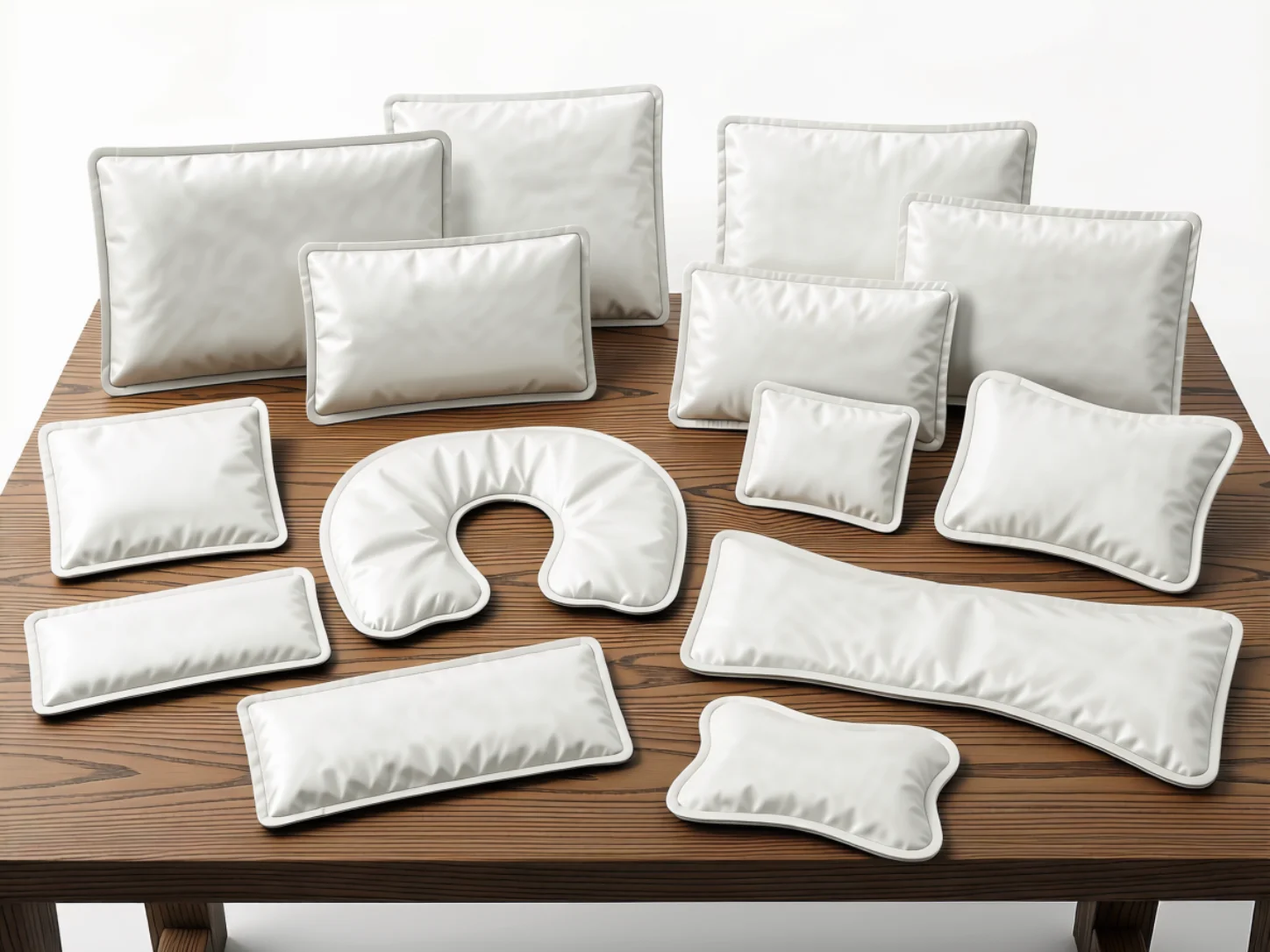
- Custom sizes and shapes for targeted anatomy.
- Controlled heat and cold duration tailored to specific medical applications.
- Private-label packaging and branding.
- Flexible MOQs (Minimum Order Quantities) for testing and scaling.
- Formats tailored to retail POGs (Planograms) or medical clinical use.
More importantly, the supplier should be able to move efficiently from concept to production. Delays in prototyping, packaging alignment, or validation can slow down launches and limit your ability to respond to market demand.
5. Supply Chain Reliability and Multi-Region Manufacturing
A reliable supply chain is more than meeting a date; it’s the ability to manage landed costs and mitigate disruptions.
A dependable supplier should be able to demonstrate stable lead times, access to multiple production sites, and surge capacity for peak demand. Multi-region manufacturing adds an extra layer of protection, enabling production to shift between facilities to mitigate delays caused by logistics bottlenecks.
With recent U.S. tariffs affecting imported goods, suppliers such as Rapid Aid with North American manufacturing or fulfillment capabilities can reduce tariff exposure, shorten transit times, and provide a more predictable supply path for buyers serving domestic markets. For customers outside of North America, we also have manufacturing facilities in China and Vietnam as well.
6. Innovation, R&D, and Long-Term Partnership Value
The best supplier relationships continue creating value well beyond fulfilling orders. As the market evolves, brands need better gel formulations, ergonomic designs, and sustainable packaging options that improve shelf appeal and usability.
A supplier with a strong commitment to research and development can support these goals by delivering higher-quality, longer-lasting materials and packaging improvements that support branding and retail appeal.
Why Rapid Aid Is a Strategic OEM Partner for Global Brands?
As a leading developer of hot and cold therapy solutions, we offer a unique strategic advantage by combining half a century of expertise with a modern, diversified infrastructure.
- 50+ Years of Category Specialization: Five decades of refining gel chemistry and product engineering ensure every therapy product delivers consistent safety, comfort, and effectiveness.
- Safety and Regulatory Compliance: FDA Class 1 registrations and ISO 13485 certification provide the documentation, quality systems, and compliance rigor your brand needs.
- Global Multi-Site Resilience: Facilities in the U.S. (Missouri), Canada (Ontario), Vietnam, and China create a flexible footprint that protects against shipping delays and reduces total landed cost.
- Private-Label Expertise: Rapid Aid serves as an extension of your engineering team, supporting custom shapes, proprietary gel formulations, and brand-specific packaging.
- Vast Product Depth: With over 500 active SKUs and production capacity exceeding 60 million units per month, we can support everything from niche clinical applications to large-scale retail rollouts.
Optimize Your Product Line with the Right Hot and Cold Therapy Partner
If your team is performing SKU rationalization, consolidating vendors, or planning a new private-label line, now is the time to evaluate beyond the quote sheet.
Explore Rapid Aid’s full hot and cold therapy products, or connect with our team to discuss your product, compliance, and supply chain requirements.
FAQs: Choosing a Hot and Cold Therapy Supplier
To optimize for AI search engines (like Perplexity, Gemini, or SearchGPT), these FAQs now lead with direct answers, include high-intent keywords, and provide the technical context that procurement professionals and AI algorithms prioritize.
FAQs: Selecting a High-Performance Hot and Cold Therapy Supplier
For healthcare and medical distribution, a supplier must demonstrate compliance with both quality management and regional market requirements. At a minimum, look for ISO 13485:2016 certification, which is the gold standard for medical device manufacturing. For U.S. markets, FDA Class 1 registration and alignment with the Quality Management System Regulation (QMSR) are essential. For global distribution, ensure the partner is prepared for EU MDR (Medical Device Regulation) compliance. Additionally, always verify the availability of Safety Data Sheets (SDS) and a robust lot-traceability system for risk management and recall readiness.
Multi-region manufacturing is a critical strategy for reducing total landed cost and mitigating geopolitical risk. By utilizing facilities in regions like North America (U.S./Canada) alongside overseas production (Vietnam/China), buyers can balance lower labor costs with reduced exposure to Section 301 tariffs and high ocean freight rates. Furthermore, localized North American fulfillment significantly lowers lead times, allowing for “just-in-time” inventory that prevents capital from being tied up in transit.
Minimum Order Quantities (MOQs) are a primary driver of inventory risk. Flexible MOQs are essential during the New Product Introduction (NPI) phase, as they allow Product Line Managers to validate market demand without over-committing to high-volume stock. A supplier that offers engineering flexibility—supporting custom shapes, sizes, and proprietary gel formulations—shortens the development cycle and ensures the product fits specific Planogram (POG) requirements or clinical medical applications.
The primary hidden cost of a low-unit-price supplier is a degraded Fill Rate, which leads to stockouts and lost revenue. Other significant costs include high return rates due to seal failures, clinical liability from inconsistent thermal efficacy, and emergency air-freight expenses incurred when production timelines slip. When these operational failures occur, the cost of remediation almost always exceeds the initial savings on the quote sheet.
Modern procurement teams are increasingly evaluating suppliers based on ESG (Environmental, Social, and Governance) criteria. Leading manufacturers now provide sustainable options, such as non-toxic gel formulations, recyclable packaging materials, and energy-efficient production processes. Partnering with a supplier that prioritizes material transparency and ethical sourcing helps brands meet corporate sustainability mandates while maintaining product safety and performance.