Summary: As part of our ongoing commitment to patient safety and professional standards, we understand the importance of providing healthcare facilities, sports medicine professionals, pharmacies, pediatric care centers, and wholesale/private-label distributors with reliable, evidence-based information on the safety and proper use of custom hot and cold packs. This article aims to ensure patient safety, regulatory compliance, and optimal therapeutic outcomes while aiding in informed procurement decisions. Let’s dive into the details.
Hot and cold packs are among the most prescribed therapeutic tools in clinical practice. From emergency departments and sports medicine clinics to long-term care facilities and pediatric wards, custom hot and cold packs are deployed daily across an extraordinary range of patient populations and therapeutic contexts. They’re convenient, cost-effective, and backed by decades of evidence.
However, the question often arises, “Are custom hot and cold packs safe?” The answer is an emphatic yes, provided they are well-designed, clinically appropriate, and used as directed. When applied correctly, custom hot and cold packs provide reliable, non-invasive support for pain management, inflammation control, and rehabilitation. When misused, however, they carry risks such as thermal injury, skin damage, or delayed healing.
The global hot and cold therapy packs market is projected to grow from USD 1.2 billion in 2025 to USD 2.2 billion by 2035, reflecting a 5.9% CAGR driven by demand in healthcare, rehabilitation, and pain management. Not all hot and cold therapy products are the same, however. Rapid Aid’s custom hot and cold packs are designed with safety and practical clinical use in mind. This article provides comprehensive guidelines and usage tips for custom hot and cold packs to ensure patient safety and well-being.
How Hot and Cold Packs Alleviate Pain and Inflammation?
Hot and cold packs function differently and are used for specific types of injuries. Understanding these mechanisms can help healthcare professionals decide when to employ each type of treatment, ensuring optimum results for their patients.
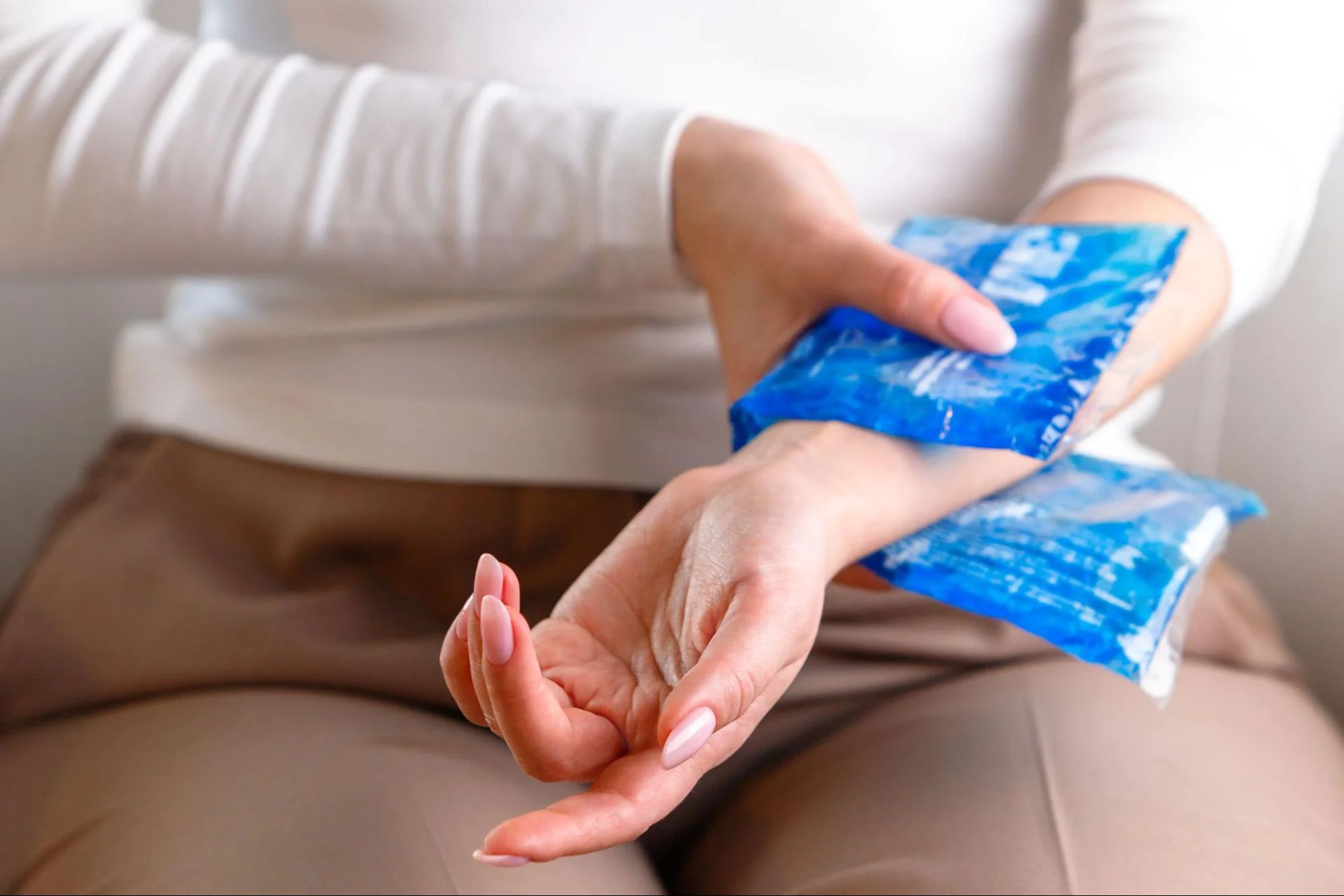
Cold packs, or cryotherapy, work by reducing blood flow to a particular area. This helps limit the body’s inflammatory response, thus reducing swelling and pain. Cold packs are most effective when used immediately after an injury, during the first 48 hours.
On the other hand, hot packs, or thermotherapy, increase blood flow to an area, making them ideal for reducing muscle tension and stiffness. Heat also facilitates the transport of nutrients to the affected area, promoting healing.
Both hot and cold therapy have been clinically proven to provide short-term pain relief and aid in recovery. However, it is crucial to remember that while they provide symptomatic relief, they don’t cure underlying conditions and should be used as part of a broader care plan.
Appropriate Applications: When to Use Heat Therapy vs. Cold Therapy
Heat and cold therapy are used for different types of injuries, and understanding when to use each can help maximize their effectiveness.
- Cold Therapy: Best used immediately after an injury. It should be applied to acute injuries like sprains, strains, or sudden knocks. It can also be used for recent injuries, swelling, and bruising.
- Heat Therapy: Used for chronic conditions and to alleviate muscle tension and stiffness. It’s best used for ongoing aches, chronic pain, stiff backs, tight shoulders, or old injuries.
- Contrast Therapy (Alternating Heat and Cold): Involves alternating between cold and heat in timed intervals. It may be used in later stages of recovery when swelling has stabilized, but stiffness and reduced mobility persist. This approach is commonly incorporated into rehabilitation and athletic recovery protocols to stimulate circulation while continuing to manage residual inflammation.
Reusable gel packs can be refrozen or reheated multiple times, making them a cost-effective, waste-reducing option throughout the product lifecycle.
Key Safety Precautions for Use of Custom Hot and Cold Packs
Use in Moderation
Hot and cold packs should be used in moderation. Overuse can lead to skin damage and even burns. It is recommended to limit applications to 20-minute intervals, allowing the skin to return to its normal temperature before reapplying.
Avoid Direct Skin Contact
To prevent skin damage, these packs should not be applied directly to the skin. Instead, use a cloth or towel between the pack and the patient’s skin.
Do Not Use on Open Wounds or Broken Skin
Hot and cold packs should not be applied to open wounds or broken skin. They should also not be used on areas with impaired sensation unless under professional supervision. Patients with impaired sensation may not feel extreme temperatures, increasing the risk of burns or frostbite.
Store Properly
Proper storage of hot and cold packs is essential to maintain their efficacy. Store packs according to manufacturer recommendations to maintain consistent performance.
Clean After Each Use
Packs should be cleaned after each application to maintain hygiene and prevent contamination. Wipe the exterior surface with a damp cloth and mild soap or facility-approved disinfectant, then allow the pack to air dry completely before storage.
Inspect Before Reuse
Regularly inspect your packs for any signs of wear and tear. If a pack is leaking, ripped, or otherwise damaged, it should be replaced immediately.
Guidelines for Proper Heating and Cooling: Temperature Control and Timing
Proper temperature control and timing are vital when using custom hot and cold packs. Incorrect temperature or timing can lead to ineffective treatment or even injury.
When using a cold pack, ensure it’s cold enough to provide relief but not so cold as to cause frostbite. Cold packs should generally be applied for no more than 20 minutes at a time, with at least 60 minutes between applications.
Heat packs, on the other hand, must be warm enough to provide therapeutic benefits but not so hot as to burn the skin. Like cold packs, heat packs should also be applied in 20-minute intervals with adequate breaks in between. Before application, test the pack’s temperature using the back of your hand. If it feels excessively hot, allow it to cool before use.
Heating should always follow the manufacturer’s specified time increments and preparation instructions. Overheating can damage the pack and significantly increase the risk of thermal injury.
For facilities using hot-water activation as an alternative method, submerge the pack in hot (not boiling) water for the manufacturer-specified duration. Remove carefully with tongs or heat-resistant gloves and dry the outer surface before applying to the patient. Ultimately, it’s always crucial to monitor the patient for any signs of discomfort or adverse reactions.
General Do’s and Don’ts for Safe Use
As a final reminder, safe and effective temperature therapy depends on consistent adherence to basic precautions.
Dos
- Always place a towel, cloth, or approved barrier between the pack and the skin.
- Limit each application to 10–20 minutes unless otherwise directed.
- Allow at least one hour between sessions to reduce the risk of skin injury.
- Store packs according to manufacturer guidelines to preserve performance and safety.
Don’ts
- Apply packs to broken skin or open wounds unless specifically directed by a healthcare professional.
- Use heat therapy on fresh injuries accompanied by active swelling.
- Fall asleep during the application.
- Use hot or cold therapy in areas of impaired sensation (such as diabetic neuropathy) without medical supervision.
What to Evaluate Before Purchasing Custom Hot and Cold Packs?
For any responsible supplier, selecting a hot and cold pack manufacturer is not simply a pricing decision. It’s a safety, compliance, and liability decision.
Before approving a manufacturer, procurement teams should request detailed Safety Data Sheets (SDS), material composition documentation, and manufacturing specifications. These documents clarify the type of gel used, toxicity thresholds, and whether materials are BPA-free or latex-free. They also provide insight into durability testing and how the product performs under repeated heating and freezing cycles.
Regulatory alignment is equally important. Buyers should confirm compliance with applicable FDA, CE, or regional standards, along with clear labeling that includes warnings, precautions, and preparation instructions. Transparent quality control processes, including batch traceability and seal integrity testing, reduce risk exposure and strengthen institutional confidence.
Reusable gel packs must also demonstrate structural reliability. A well-manufactured pack should maintain flexibility when frozen, resist leakage under pressure, and tolerate repeated temperature cycling without degradation. Evaluating these characteristics before stocking or distributing the product helps prevent downstream safety concerns and unnecessary replacement costs.
Rapid Aid’s Professional Product Range
Rapid Aid manufactures more than 400 SKUs across its hot and cold therapy portfolio, including reusable gel packs, instant single-use cold packs, sodium acetate heat packs, and specialty designs for pediatric and sports medicine applications. The range is engineered for safety and compliance, durability, and consistent performance across diverse clinical and distribution needs.
Key features/benefits include:
- Patent-pending triple-layer premium fabric construction on select reusable packs, designed to enhance durability under frequent handling and repeated temperature cycling.
- Crack-resistant inner liners engineered to reduce leakage risk during ongoing freeze–thaw use.
- Direct-to-skin validated products for settings where barrier application may not always be practical.
- Class I FDA-registered medical device manufacturer with CE-marked product lines and Health Canada licensing, demonstrating verified regulatory alignment across major global markets.
- Private label and custom product development capabilities for wholesale and distributor partners seeking tailored solutions.
- Full Safety Data Sheet (SDS) documentation available upon request, supporting regulatory transparency and informed procurement decisions.
Through material integrity, advanced construction, and documentation support, Rapid Aid’s product portfolio is designed to meet the safety expectations of healthcare providers while offering scalability and reliability for distribution partners.
Contact us to deliver safe, compliant, and performance-driven hot and cold therapy solutions your clients can trust.
Frequently Asked Questions About Custom Hot and Cold Pack Safety and Usage
Yes, custom hot and cold packs are safe when used correctly and according to the manufacturer’s instructions. Safety also depends on sourcing from a credible manufacturer that follows strict quality standards, provides proper documentation, and uses tested, non-toxic materials.
No, heat should not be applied immediately following an acute injury. Cold therapy is recommended in the initial stages to help reduce swelling and inflammation.
Generally, heat therapy is recommended for muscle tension or stiffness. Cold therapy can cause muscles to tighten and may potentially increase pain.
It is generally recommended to apply hot or cold packs for 15-20 minutes at a time, with at least 60 minutes between applications.
While generally safe, hot and cold packs may cause skin damage or burns if applied directly to the skin or used for extended periods. Always use a barrier between the pack and the skin, and follow the manufacturer’s usage instructions.